Now in print – paperback versions on their way

Koriba, News

The first novel in the ‘Tales of the Koriba’ series, ‘The Dry Lands’, is now available in print format. And there’s more coming soon. The second book in the series, ‘In the Rattle of the Shaman’s Bones’ will be available within a few weeks. The rest of my current crop of books will follow during the Autumn / Fall.

The paperback version of ‘The Dry Lands’ is currently available here.

It will trundle through to the Amazon store soon, and when it does, you can grab a copy here.

The book has also been made available for extended distribution. It will take several weeks (possible six to eight) before it could even be available to order through bookstores. Once it does, it can be ordered using the ISBN codes:

  • ISBN-13: 978-1500811181
  • ISBN-10: 1500811181

In other news, the third book in the series, provisionally called ‘The Fire Within’ is being written at present. It should be coming out, all things being well, before Christmas 2014.

It’s worth noting that while the Koriba books are classified as juvenile fiction, they are aimed at both adults and young adults alike. Due to the vagaries of the book cataloguing system, there’s no prehistoric section in adult fiction, so the book’s primary comes under juvenile fiction / historical / pre-history.

New book launch: ‘In The Wreckage’

News

My latest novel, In The Wreckage (A Tale of Two Brothers), has now been published – in ebook form only at present, but with a paper edition in the pipeline. The ebook will be exclusive to Amazon for three months.

In The Wreckage is aimed at every age range from Middle Grade (10+) to adult. It’s set in a nearish future where climate change has caused the collapse of civilisation, overheating and drought across most of the globe, making the ice caps melt. For decades refugees have been fleeing to the melting arctic. The stream of refugees slowed, however, as the world ran out of fuel and ships.

In the Wreckage (A Tale of Two Brothers)The book follows the adventures of Conall Hawkins, one of two brothers abandoned on the Scottish island of Shetland while fleeing towards the arctic. The boys grow up as feral kids, living by their wits, grudgingly tolerated by the locals. They are trapped here, as no ships call at Shetland any more, and the island has become becalmed, neglected and forgotten.

The book begins when Conall, fifteen, sees a sail on the horizon. When The Arkady, the last of the sail ships, calls at Lerwick, the capital of Shetland, Conall and his brother Faro sneak on board as stow aways, hoping to reach the Svalbard archipelago and so find their missing parents.

The book is a cross between dystopian sci-fi and boys-own adventure tales such as Treasure Island and Kidnapped, designed to appeal to young adults and adults alike. You can read the book blurb here.

You can find links to a range of Amazon stores worldwide here.

The book is ‘scheduled’ for release in paper format later in 2014.

What professor Tolkien can teach us about the NSA and GCHQ

Opinion

Fiction isn’t merely entertainment. Stories give us ways to better understand the world. And ourselves.

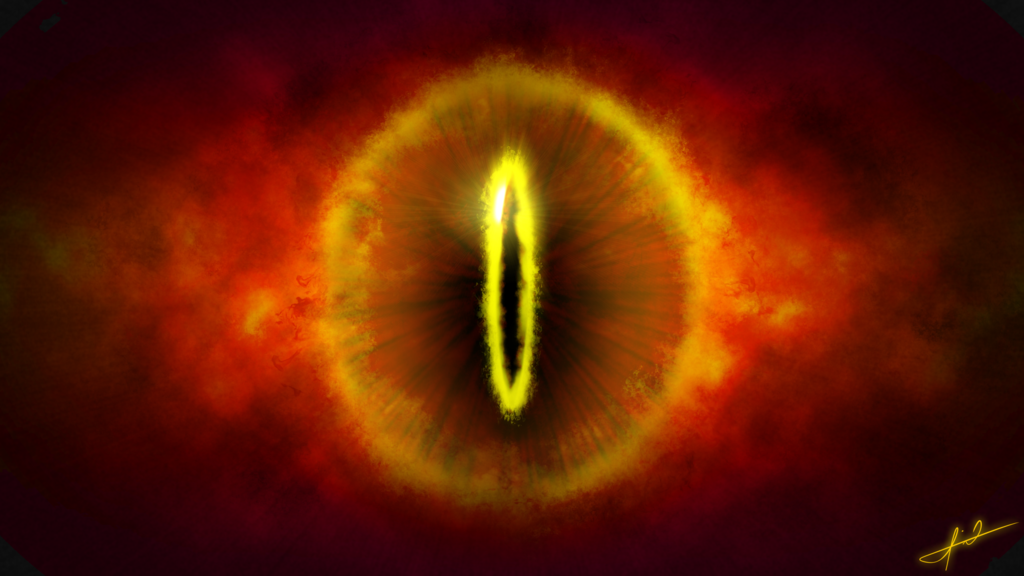
All-seeing eye of the NSA

The all-seeing eye of the NSA.
Image by Selrond on Deviantart: http://selrond.deviantart.com/art/Sauron-s-eye-410597000

Take JRR Tolkien’s fantasy classic The Lord of the Rings. The ring of power symbolises… power, plain and simple.

Some people have tried to stretch the analogy, saying is symbolises the power of atomic weapons.

I disagree. I think it represents all power.

In the book (and the movies) Frodo offers the ring for safe keeping to both Gandalf and Galadriel. Both are tempted, both refuse for the same reason. They know the power of the ring would change them. It would make them evil, turn them into their enemy, into the very thing they are fighting against. Because you can’t use evil to defeat evil. It’ll turn you to the dark side. (Or is that from a different tale?)

I see important lessons for the people who run, fund, support and agree with the work of the NSA and GCHQ.

They have at their disposal immense power. And they have chosen to grasp it, to seize it and to use it. Because they can.

This was a mistake, but they can’t see it, because they’ve become blinded by their own power. They are controlled by it.

We could try to help these people, to show them how and where they have gone wrong. But it’s an uphill task. Because – and here’s the irony – despite their obsession with surveillance, they are actually not very good listeners.

Me and my girl

out-and-about
airedale-at-the-beach

airedale-at-the-beach

This is me and my girl on a visit to the beach to the other day – glorious early Spring sunshine and warm, for England, for the time of year.

She’s the one with the moustache and beard, by the way – blowing in the wind in an extravagant fashion.

Ball Machine nominated for an award

News
Nominated for an award!

Ball machine has been nominated for an award

Those kind folks at Big Al’s Books and Pals have nominated my novel Ball Machine for an award.

Voting for the “BigAl’s Books and Pals 2014 Readers’ Choice Awards” is open from March 2nd 2014 through to March 12th. Ball Machine is nominated in the Speculative Fiction (excluding Fantasy) category. You can vote for it here.

Last year my novel ‘Lost In Thought’ was also nominated in the same category, but lost out to some book called ‘Wool’ by a guy called Hugh Howey. I don’t know – must be about knitting or something! (Kidding. I loved the Wool books, all of them. Highly recommended).

You can read more about ‘Ball Machine’ here.

The 'school of wizards' controversy solved – with a surprising first entry into the canon

Opinion

…in which the debate over who first came up with the idea of a ‘school for wizards and witches’ is finally put to bed, once and for all!

Of late, on the interwebs, there has been yet more debate among writers and readers  about who  first came up with the idea of a school or university  for witches and wizards.

JK Rowling’s Hogwarts is the best known wizarding school, of course. But she wasn’t the first to use such an idea. Before her there was Terry Pratchett and his discworld series, featuring the Unseen University (where wizards learn their trade), and a young witch who attends a school of witchcraft.

And before that there was Ursula K. LeGuin and her Earthsea saga, with its school for wizards on the island of Roke. The first book in the series was published in 1968 – long before Pratchett and Rowling.

So was she the first? No. People have identified similar examples dating back to the early twentieth century. And I can push the date back even further. Much further. And I can reveal what I believe is the first ever written mention of such a school …(drumroll please)… [continue reading…]

"Lean, terse sentences move this tale along at a blistering pace."

News

The  book review site Big Al’s Books and Pals has just published a review of my novel ‘Ball Machine.’ If you haven’t read the book yet, check out the review. They do warn that the book may not appeal if you don’t like tennis and soccer. (But surely everyone like tennis and soccer, don’t they?). But the reviewer, Pete Barber, himself a successful novelist, goes on to say:

“This is a terrific read. Gosh, Mr. Townley can write his little socks off. Lean, terse sentences move this tale along at a blistering pace. Crazy concepts presented so succinctly that even wild stretches of the imagination seem not just possible, but obvious.”

And:

“Until the very last page, I didn’t know how things would finish for Vitas.”

And:

“Highly recommended–a very unusual and fascinating read.”

You can find the full review here.

'In the Rattle of the Shaman’s Bones' now live

Koriba

Rattle-finalThe novel ‘In the Rattle of the Shaman’s Bones’ is now live on Amazon and Smashwords. It should make it to other distributors over the coming days and weeks.

The book is the sequel to ‘The Dry Lands’ and the second in the prehistoric adventure series ‘A Tribal Song – Tales of the Koriba.’

You’ll find ‘Rattle’ on Amazon here in the US, and here in the UK. Or here to buy it via Smashwords – which gives you a wide range of formats, including PDF, mobi (for kindle) and epub.

In the Rattle of the Shaman's Bones ready to launch

Koriba

Rattle-final The second book in the ‘Tribal Song’ series is ready to launch, and is likely to hit the ebook stores from December 26th. It might take a week or more for it appear in some of the stores, however. The Apple store is closed over the Christmas period, for example, and not accepting new titles. (It’s open for buying, obviously).

The book is the sequel to ‘The Dry Lands,’ and is once again set in East Africa 43,000 years BCE (before the common era – or plain old BC if you prefer).

‘In The Rattle of the Shaman’s Bones’ continues the tale of Temfe and the rest of the tribe of the Koriba.  Once again, it is written to appeal to both adults and young adults alike.

Here is the back cover blurb:

A curse is sharper than a flint blade

The plains of Africa, 43,000 years BC – the dawn of human culture

Death stalks the hunting grounds, striking at the elders, the leaders and the wise ones.

A power struggle will determine the future of the Koriba. Can Temfe, the chief’s son, unite the tribes? Can he lead them across the desert? And save his father, poisoned and dying, his spirit lost in shadow?

Should he trust Yorodjan, the scarred, one-eyed seer who worships the death birds? Who flies as a vulture in the other-worlds?

Enemies surround Temfe. Some fight with spears and flint blades. Others with poison, curses and betrayal. All of them determined to control his tribe, to seize its lands, destroy its people.

To save the Koriba, Temfe must learn the ways of the shaman, cross into the vision-worlds, defend the ancestors and defeat a murderer who wields malign power.

A prehistoric adventure for adults and young adults alike.

The book was originally intended to be called ‘Caves of the Seers’. The most recent edition of ‘The Dry Lands’ refers to this title as the upcoming sequel. So if you’ve been waiting for news of ‘Caves of the Seers,’ this is that book, and this is it’s new title. Apologies for any confusion. But I hope you’ll agree that the new title is much better. If you don’t agree, let me know in the comments.

A sidelong glance at the truth – why ‘mimesis’ still matters, even in genre fiction

bookworld

Mimesis,’ the idea that stories act as a mirror to the truth, drives fiction. When done well, it sets the great books apart from the also rans – whether or not writers and readers know it about consciously. Because it’s what brings the tale to life. And what makes it linger in the memory.


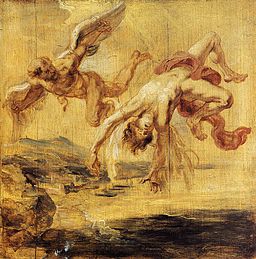
Rubens - The Fall of Icarus

Rubens – The Fall of Icarus

Why do we read and watch fiction, stories that have been made up, that simply aren’t true? For many reasons. For entertainment, of course. But also to learn. One theory of how story works is that the hero or central character has a problem to solve, and we the readers share in his challenge, we face the dangers and conflicts with him, or her, and by doing so we learn valuable lessons, which we can use in our own lives.

But surely we never have to fight dragons, or slay zombies, or catch criminals? We may be happily married, and don’t need to snag a lover or attract a spouse.

The point is that we still learn deep truths about life from fiction. Often it’s easier to see the truth when it’s presented in the form of a story, even if that story may itself contain huge exaggerations.

Take George Orwell’s 1984 as an example. The book is famous for showing how the state would come to spy on its own people. It’s a terrifying, dystopian vision. But much of the violence and cruelty of the state shown in the book has never come to pass, even though, in this day and age, there is arguably much more surveillance of our lives taking place than Orwell could ever have envisaged. By exaggerating, Orwell was able to create a picture in our minds which was both powerful and memorable. And most importantly of all, it rang true. Even though it wasn’t ‘true’ in any strict sense. The people were made up. The incidents never happened.

Often the reason books become popular is because they show us, by reflection, an image of the truth that is more powerful than the mere facts of the case. [continue reading…]