If you want to change something to do with yourself or your life, it’s tempting to think: ‘I’ll start this tomorrow.’
That would be a mistake. Start today. Or never.


If you want to change something to do with yourself or your life, it’s tempting to think: ‘I’ll start this tomorrow.’
That would be a mistake. Start today. Or never.

There are two types of perfectionist: the ones who never get anything started and the ones who never get anything finished.
Photo: Open Book by Doug Aghassi via Flickr
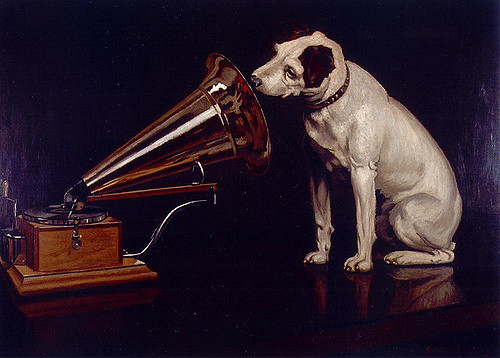
One of the most important skills in life is knowing when to stop talking – and listen to the other person instead.
Photo by Beverly & Pack via Flickr and Creative Commons

We’ve found a terrific new way to confuse, baffle and impress our dogs. It involves knowing when the other humans in the family are coming home and miraculously being out in front of the house in plenty of time to welcome their arrival.
You can almost hear the dogs thinking: “How did they know? Is it their super hearing? Or ESP?”
The truth is a little more mundane – the handy ‘Find my Friends’ app on an iPhone[footnote]You could of course just use the phone to call ahead – but where’s the fun in that?[/footnote][footnote]I still haven’t revealed to my partner the real reason I want my location traced: it’s in the forlorn hope she might get dinner ready in time for my arrival.[/footnote].
As Arthur C. Clarke would say: “Any sufficiently advanced technology is indistinguishable from magic.”
Photo: 'Bailey Boo' by Joe Penniston
via Flickr and Creative Commons
The fantasy adventure ‘Monster Hunters of the Undermire’ now has new artwork for the cover – now with added action and fire breathing dragons:

Neverwhere meets Beowulf

Sometimes there is too much goodness in us and we have to override our instinct towards selflessness in order to protect and help others.
Take an aircraft, the engines on fire, the compartment filling with smoke. The breathing appratus drops from the ceiling. The instructions are clear – don’t help your loved one in the seat next to you. Don’t rush to the aid of the child across the aisle, flailing and confused though they may be. You must save yourself first because that’s the only way you can help them. Get your own oxygen mask on, then turn your attention to others.
This is not simply because you must live so you can help those around you. There are two dangers in the smoke filled environment – there is the threat of death for sure, but before that, the danger of falling unconscious.
You must remain conscious. If those around you pass out, it’s not the end. Their lives can still be saved provided you remain awake and calm, act but do so from a position of safety and strength.
The same principle applies in our lives – whether it’s caring for family members or deciding where priorities lie and how much time to devote to work, or our own needs.
If we always put others first, we run the risk of falling unconscious. Wake up, and we can help them so much more. But to be awake, we will need a streak of selfishness, taking the time, before anything else, to reach for our oxygen – in whatever form it may take.
We need breathing room. Only once we have it can we be selfless.
Photo by Nick@ via Flickr and Creative Commons
This is chapter three of the fantasy adventure ‘Monster Hunters of the Undermire’, which is officially ‘coming soon’. Chapter one is here. Chapter two is here. Needless to say, you should read those first.
Robbie trudged after his father down the grassy slope towards the dig. A series of pits and trenches lay open to the elements while others had been covered with tarpaulins.
The work across most of the site had halted. The students, the archeologists, the helpers, volunteers and hangers-on had clustered around a particular trench, huddled together, peering at the ground.
Abi waved to them and brushed light blonde hair out of her face. Abi was younger than Robbie’s dad. Younger than his mum. Much younger.
She ignored Robbie as they approached, but beamed her best smile for his dad and threw her arms around his neck. A diamond flashed in the afternoon sunshine. An engagement ring. Dad hadn’t said anything. When did this happen? Did they hope he wouldn’t notice? Did they think he wouldn’t care?
Dad was still married to Mum. They’d have to get that sorted first. Should he report his own father for bigamy? He could go to the police.
Or not.
But what about Mum? She deserved to know. She’d pretend she didn’t care, but that was an act. His parents were too weird for words.
But the ring must be new, or he’d have noticed before. And she was wearing it on the dig, showing it off to let everyone see. When did it happen? Last night? Today?
Robbie’s father took the bag of tools from him and issued instructions to his diggers, his students and volunteers. Robbie wormed his way through the crowd until he could peer down into the pit, where two young women knelt in the mud brushing at the dirt.
Even from this distance, in the gloom of the hole, Robbie realised his father had, for once, been right. Shrivelled and twisted, the mummified corpse still had skin on its head, neck and arms, tanned a dark brown as if soaked in tea. Its face was clear, the features preserved, but they seemed tortured as if he’d died in terrible pain.
It might even look cool, once they got it out of the mud. But it would be whisked away to some dark room, or locked in a cabinet. What was the point? Might as well leave it in the ground.
The work redoubled as his father shouted orders, urging the teams to get the pits and trenches covered before the storm came. But not the one with the body. Work would go on, into the dark, to excavate as much as possible before the rains arrived.
There was nothing here for Robbie to do. But there were still some hours of daylight. Why waste them? He went to his father who crouched beside the diggers.
“Can I go up to the moor, see the horses? Take photos?”
His father glared at him. “You won’t go near the water, or the tomb. Don’t go back there.”
“No, of course not.”
“I’ll be watching.”
“I’m taking photographs. All right?” He held up his iPhone. It was all he had for taking pictures, and it was of little use up here. Everything was too far away. He’d asked for a proper camera but they fobbed him off, every time. If he was good, they would say. One day, if he stayed out of trouble – but there was little chance of that.
He slipped off, heading away from the black mire. Once out of sight, Robbie ran towards the higher moor where the grass had been chewed short, the ground sodden and wet under his feet. He edged towards the ponies that lived wild up here but they jittered, becoming watchful and alert.
He skirted a withered tree, bent and twisted by high winds. The ponies shuffled as he moved closer, their heads down, still eating the coarse grass, but aware of this boy acting strangely. He should move slowly but he itched to get closer. He crouched low. The pony closest to him was listening, ready to run. It shook its head, shaggy hair on its neck whipping from side to side. The other ponies scampered further off then settled down once more. This time Robbie took long, sneaky strides but as he crept forward they took fright and bolted. The ponies ran as a herd, heading uphill.
Robbie swore to himself and tucked the phone in his pocket. It must be the wind in the wrong direction. Or something had alarmed them: a fox maybe, or a dog, the scent caught on the breeze.
He turned and headed towards a copse of trees. He’d found a badger set, weeks before, and even sneaked out one night to lie in wait and get a photo in the dark. But they never came. Either they had moved on, or his presence had disturbed them. He found fresh diggings, earth scattered and droppings. The badgers were here, but they wouldn’t come out in daylight. He could wait for dusk but his father would be fuming by then.
As he left the copse a buzzard swooped overhead and landed on the ground. It pecked at something then took off. It must have caught a rodent, a rabbit maybe? He ran ahead to look but the bird was long gone and its prey with it.
He turned in a circle, examining the moorland. There was nothing here, nothing to do. There was wildlife and animals he’d never see at home, but he couldn’t find them or get close enough to take a decent snapshot.
Out to sea, black clouds gathered. The temperature was dropping, with rain in the air. Robbie turned towards the dig, shoulders hunched. He needed something to do to fill the last days of summer and make him feel alive.
As he approached the site the archeologists were packing up, laying out tarpaulins and putting away their tools. The wind had picked up. The storm clouds rushed in across the Bristol Channel, heading for the coast. His dad was barking orders at anyone who would listen.
They’d be an hour at least. Robbie could sit in the car and wait. Or he could help. Or he could sneak away once more. Could he get away with it? Would he get in trouble? Worth it, for another look at that face, at those eyes under the water. He had to know – was it real?
He sauntered towards the edge of the dig site but he didn’t get far. A voice boomed from behind him. His dad, angry. Again. Robbie stopped, looked back.
“Where are you’re going? Get back here.”
He shouldn’t have to take orders. He wasn’t a baby.
“I told you to stay out of trouble. Can’t you, just for once, for me?”
Robbie slunk back towards his father. “I was only…”
“Don’t leave my sight again. If you go missing, I swear, I’ll…”
He would what? He couldn’t do anything.
“Sit over there, where Abi can see you. And don’t move.”
Robbie mumbled and threw himself down onto the damp grass. He took out his iPhone and stared at it. No signal. No WiFi. No nothing.
He should have taken a photo of the water but he thought of it only now when it was too late. A chance might come to try again, if he could slip away, go back to the mire, look into the dark water.
He had to know – who was that girl, looking back at him with eyes on fire?
Independence is more than simply a desire to manage your own affairs and be free of the interference of others. It also encompasses the ability to look after oneself – to be self-sufficient and self-reliant. Which does in turn depend on an ability to remain young, because getting old will really mess with your ability to walk tall and run free. And that is one of the many reasons community and family remain so popular.
This is chapter two of the fantasy adventure ‘Monster Hunters of the Undermire’, which is officially ‘coming soon’. Chapter one is here. Needless to say, you should read that first.
Evelryn crouched over the black water, staring at the surface of the mire, waiting for the boy’s blue eyes to reappear. She lingered, half-hoping the face would return, but it was gone. A trick of the light she told herself, nothing more. She’d ask her grandmother, the old woman might know. Or maybe the wicce who lived in the woods, she’d understand. She knew the mysteries, though her answers came wrapped in riddles, tied up in rhymes.
The girl gathered her herbs and the eggs taken from a wood pigeon nest high in a yew tree, folded them in her shawl and made her way out of the dell into the chill of the afternoon breeze. Across the hillside men lugged a tree trunk from a copse. Smoke rose from the distant roundhouses. She glanced at the opaque sky and the pale glow of the sun. The best of summer had slipped away and already the evenings grew chilled, once a dew began to fall.
She made her way along the track, muddy from the passage of cattle and stones hauled from the quarry to the ceremonial site by the river. She kept out of the mud, sticking to the grass by the side, though the walking was difficult on sloping ground. A bird screeched behind her and she glanced back towards the black pool: only a hawk, circling high in the sky.
As she neared the roundhouses she saw her grandmother sitting on her favourite stone in the central clearing. Evelryn knelt beside her, took her hand and put the smooth, white eggs into her grasp.
“Unkind, to steal from them,” the old woman said. But she clutched the eggs all the same.
“I saw something today,” Evelryn said, and told the story of the black water.
“The old pond?” Her grandmother wagged a finger. “Haunted. Spirits from the old times. Stay away.”
“They used to give offerings there.”
“Not now. No use,” the old woman said. “No good can come of it. You stay clear.”
“But if there was a way…”
“There’s no way.” The old woman cut her short. “Be careful, you don’t know your strength girl, that’s the truth of it. Don’t go back, you promise me?”
Evelryn wrapped up the eggs once more. “I’ll put these safe.”
“You didn’t promise,” the old woman called as Evelryn walked towards the small roundhouse close to the tree-line. “Don’t think I didn’t notice.”
“Don’t worry,” Evelryn called back. But she knew the old woman wasn’t fooled.
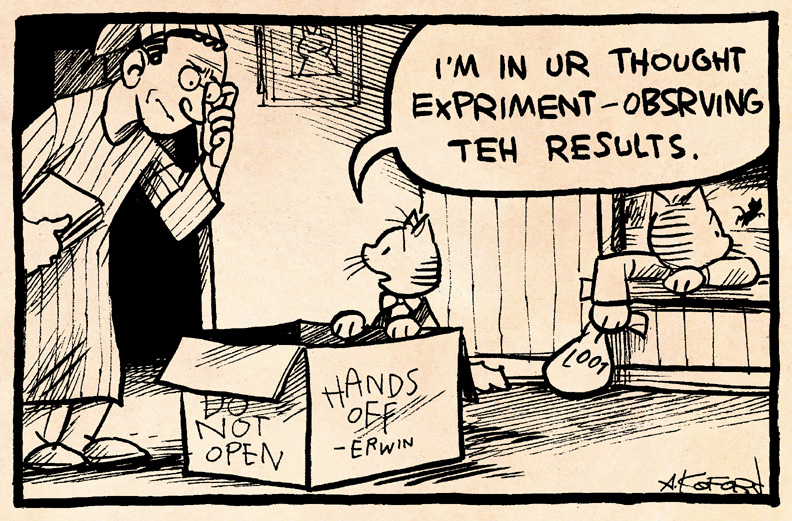
All arguments – on any subject, legal, religious, scientific – can be reduced to one thing: the meaning of words. But people forget this, and arguments can go on for days, years, centuries and people fail to realise that they are arguing about different things because they haven’t defined what they mean by a certain word.
Let’s take a big one: does God exist? Or do gods exist?
Fire away with an opinion, by all means. But how are you defining God? Is your definition the same as the person you are arguing with? Even if you’ve sat down together and come up with a watertight legal definition of ‘God’ so that you can debate his or her existence, that still won’t do you any good. Because the word is not contained or restricted by the definition. Not once it enters your consciousness. There, it is influenced by your personality, your memories and emotions. Many people have intense connections to this word – dating back to inner experiences, or things that have happened to them or to loved ones, or simply times from childhood. The smell of incense, perhaps, triggering wisps of recollection just beyond reach of full remembering.
I’d venture that there are, at any one time, seven billion or so definitions of ‘God’ available on the planet – one (at least) for each and every person at any one time. And these are fluid, changing constantly depending on our experiences, how we’re feeling, when we last had a good meal.
Try another big one: how do you define ‘you’? Are you your body and mind combined? Is there a soul? What do you mean by that? Are you defined by your job, your name, your social status, your gender, your marital status? Or are ‘you’ something apart from all of that?
Are you always the same person? Have you always been that person, or were you different when you were younger? If you believe in an afterlife, which version of ‘you’ will go there? How will not having your body change who ‘you’ are?
I don’t have answers to these questions. But I do think they are interesting. I would enjoy discussing them but generally I don’t, because I find that talk can turn to argument too quickly – and the meaning of the words become too rigid on the one hand, and very, very fuzzy on the other.
When discussing anything with anyone, it’s not enough to know what a word ‘means’. What does it mean to me? That’s what really counts. And until I know that, then surely I don’t know what I believe.
If I don’t know what it means to the other person, then I don’t know what they really believe, so I really should stop disputing with them. It won’t get me far in any case.
All of which is very problematic for someone whose job and hobbies revolve around writing and the splattering of words onto both paper and pixels.
Words, dammit, are tricky, tricky buggers. They’re like people, really: not contained by definitions.
Photo courtesy of Ape Lad on Flickr and Creative Commons.